
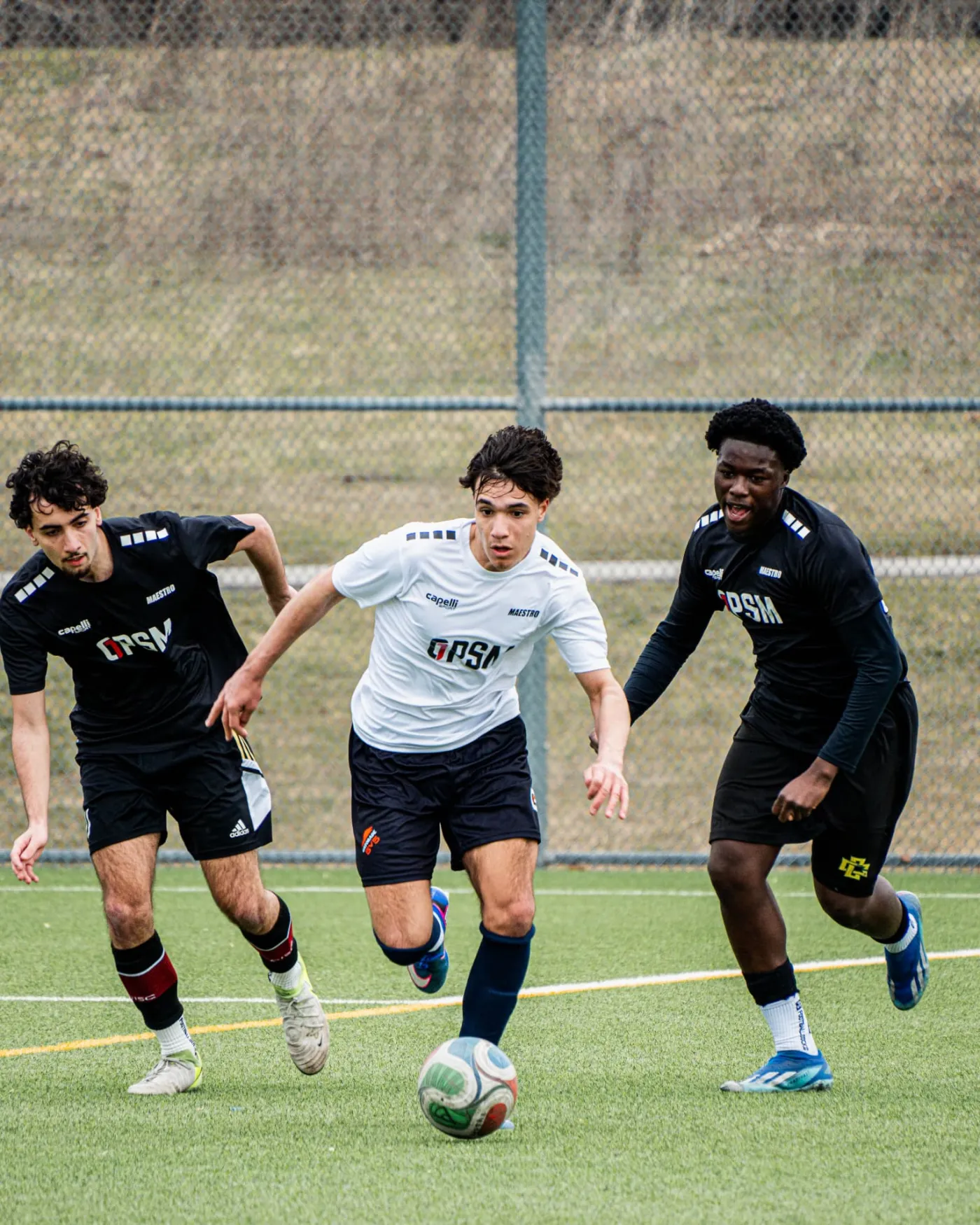
Technical Development Beyond Team Training
How purposeful individual work can improve first touch, passing, ball control, and confidence in match situations.
Team training is essential because soccer is a collective game. It teaches players how to solve problems with teammates, understand a system, and perform against opponents. However, a team session cannot always provide every player with the number of repetitions needed to improve a specific technical detail.
Purposeful individual work can fill that gap. It gives a player time to slow down a movement, understand the technique, repeat it with care, and gradually add pressure. The goal is not to collect impressive exercises. The goal is to improve actions that appear regularly in matches.
Start With the Demands of the Position
Technical development should reflect what the player is asked to do. A goalkeeper, central midfielder, winger, and striker may all need a strong first touch, but the direction, pressure, and next action will often be different.
Players should review their role and identify the situations that occur most frequently. Which foot receives the ball most often? Where does pressure usually come from? How much time is available? Which pass or movement follows the first touch? These details help individual training resemble the decisions required in competition.
This approach also prevents players from spending most of their time on skills that look creative but have little connection to their match responsibilities. Creativity still matters, but it becomes more useful when it is supported by strong fundamentals.
Make Every Repetition Intentional
Repetition builds familiarity, but careless repetition can also strengthen poor habits. Players should focus on body position, balance, the quality of contact, awareness before receiving, and the accuracy of the next action. The standard should remain high even when the exercise appears simple.
Training at a slower speed can help a player understand a new movement. Once the technique becomes reliable, speed and pressure can increase gradually. Rushing immediately to maximum intensity may hide mistakes instead of correcting them.
Players can also change the angle, distance, surface of the foot, or direction of the next action. These variations help the skill become adaptable. Soccer rarely presents the ball in the same way twice, so technical confidence must include the ability to adjust.
Train the Weaker Foot With Patience
A more reliable weaker foot can give a player additional passing options, improve balance when receiving, and make movement less predictable. Progress often feels slow because the player naturally trusts the stronger side in difficult moments.
The solution is consistent exposure. Begin with manageable actions and demand clean execution. Short passes, controlled receiving, and simple finishing can establish confidence before distance or pressure increases. The weaker foot does not need to become identical to the stronger foot before it becomes useful.
Players should notice whether the weaker foot begins to appear naturally in team training and matches. That transfer is more important than completing a large number of repetitions in isolation.
Add Decisions to the Exercise
Technique in soccer is connected to information. Players scan, recognize pressure, select an action, and then execute. Individual work becomes more valuable when it includes simple decisions rather than following the same pattern every time.
A coach or training partner can provide visual or verbal cues. Different targets can represent different options. Video can help the player review whether awareness happened early enough. Even a basic exercise can become more realistic when the player must identify information before touching the ball.
Decision based work should remain controlled enough for the player to learn. If every repetition becomes chaotic, the technical purpose may disappear. The level of difficulty should challenge the player without removing the possibility of quality.
Know When to Stop
Fatigue can reduce concentration and change movement quality. An individual session does not become more effective simply because it lasts longer. Players should finish with a clear standard and protect their readiness for team training and competition.
Young players should complete additional physical or technical work with appropriate guidance and should respect the training plan established by qualified coaches. Pain, unusual discomfort, or an injury concern should be discussed with a responsible adult and an appropriate health professional.
OPSM Connect helps players keep development goals, profile information, video, and opportunities connected. Individual soccer training works best when it supports the wider journey rather than competing with it. The extra work matters when it is relevant, consistent, and performed with care.
CONNECT BEYOND THE TOUCHLINE
Related Articles
Why Player Management Matters at Every Stage of a Soccer Career
The right support can bring structure, perspective, and direction to an increasingly complex journey.
Your Player Profile Is Your First Impression
How to present your ability, experience, and ambition clearly to coaches and scouts.
How to Prepare for a Soccer Showcase and Make the Opportunity Count
What players should do before, during, and after a showcase to create a professional impression.