
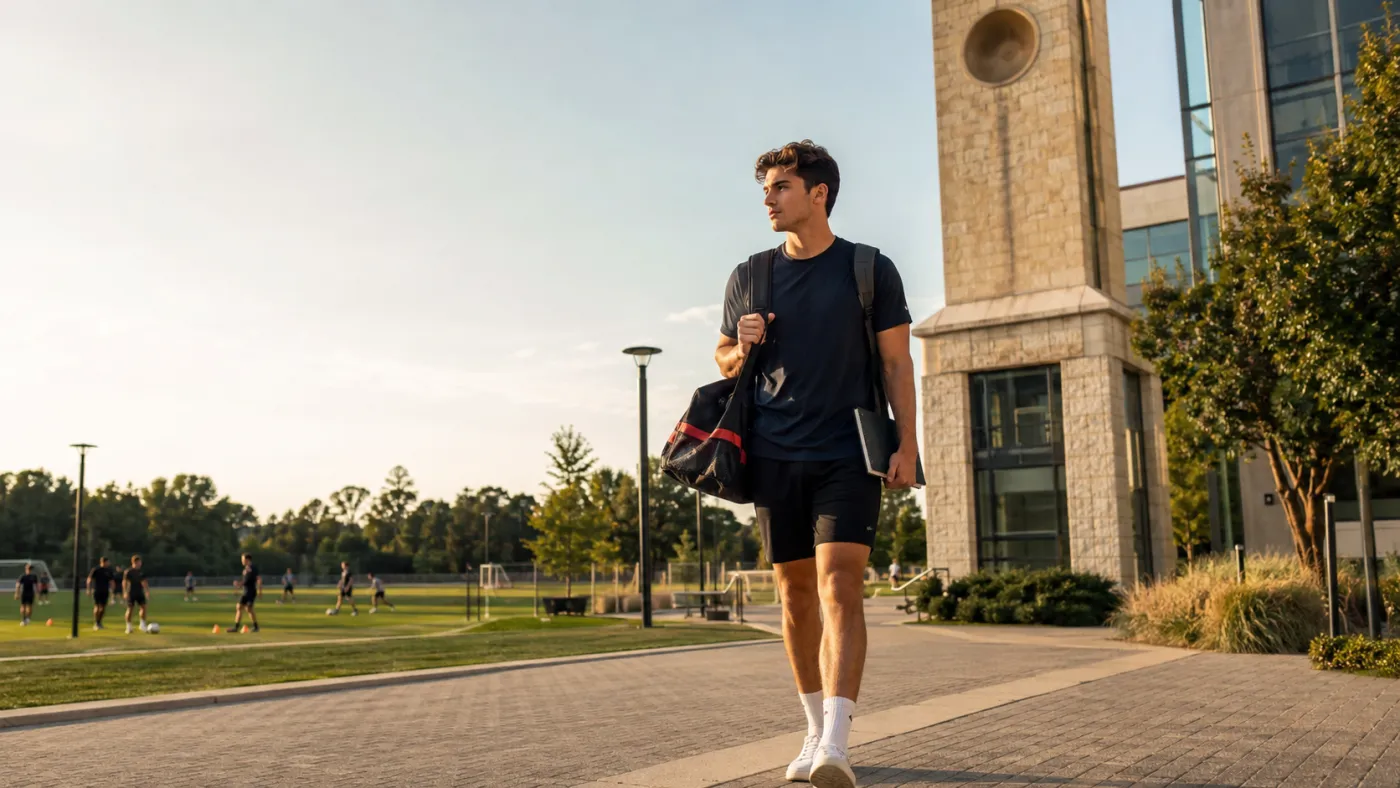
How to Balance Academics and College Soccer
Practical habits that help collegiate players manage classes, competition, travel, recovery, and personal responsibility.
Balancing academics and college soccer is not about creating a perfect schedule. It is about making good decisions consistently when several important responsibilities demand attention at the same time. Training, matches, travel, classes, assignments, recovery, and relationships all need space in the week.
Many players arrive at college after succeeding in both school and soccer, yet the new environment can still be difficult. The pace is faster, expectations are less familiar, and support may not appear automatically. Players who build practical systems early are better prepared to manage pressure without allowing one part of the experience to overwhelm the rest.
Plan the Week Before It Begins
A weekly plan gives responsibilities a visible place. Players should record classes, training, meetings, treatment, travel, assignment deadlines, exams, meals, and personal commitments. Once fixed responsibilities are clear, focused study periods can be protected around them.
The plan should be realistic. Filling every open hour creates a schedule that cannot absorb delays or unexpected work. Short periods for preparation, travel, and rest make the plan more usable. Reviewing the coming week on the same day each week can turn planning into a habit rather than an emergency response.
Work Ahead of the Travel Schedule
Competition can disrupt an ordinary academic routine. An away trip may remove an evening that was expected to be available for study, and a late return can make the following morning more difficult. Players should review the team schedule and identify academic conflicts as early as possible.
Completing part of an assignment before travel can reduce pressure later. Downloading required materials, asking questions in advance, and knowing where work can be submitted also help. The goal is not to complete every task far ahead of time. It is to avoid allowing a predictable trip to become an avoidable crisis.
Communicate Before There Is a Problem
Clear communication is one of the most valuable collegiate skills. Players should understand each instructor's expectations and notify the appropriate people about official travel through the process used by the school. If a conflict or difficulty appears, an early and respectful conversation usually creates more options than a message sent after a deadline.
The same principle applies within the team. If an academic requirement cannot be moved, the player should communicate through the proper channel rather than making assumptions. Coaches and academic staff are better able to help when they receive accurate information and enough time to respond.
Use Support Before You Fall Behind
Tutoring, writing support, academic advising, study spaces, and course planning can be valuable even when a player is performing well. Support is not only for a crisis. It can help athletes work more efficiently and understand difficult material before confusion becomes discouragement.
Players should learn which services are available and how appointments are arranged. They should also identify the people responsible for academic questions within the athletic department. Asking for help early shows awareness and responsibility. It does not show weakness.
Protect Recovery and Attention
A schedule that ignores sleep and recovery will eventually affect both learning and performance. Tired players often need more time to complete ordinary work, while rushed academic decisions can create stress that follows them into training. Recovery supports concentration as well as physical readiness.
Focused work is often more useful than long periods of distracted study. Players can reduce interruptions, choose a suitable environment, and begin each session with a clear task. Consistent attention during shorter blocks can protect more time for rest and personal life.
Measure Success Across the Whole Experience
There will be weeks when soccer demands more and weeks when academics require greater attention. Balance does not mean that every day looks equal. It means the player understands priorities, communicates changes, and returns to healthy routines after an intense period.
OPSM Connect helps players organize the information and opportunities surrounding their collegiate journey, so fewer details are left to memory. The same principle applies to daily life. A reliable system creates room for better decisions. Players who manage academics and soccer with care do more than protect their eligibility. They build habits that remain valuable in every career that follows.
CONNECT BEYOND THE TOUCHLINE
Related Articles
Understanding Collegiate Soccer in North America
A practical guide to the pathways, expectations, and decisions that shape the collegiate journey, from NCAA, NAIA, and junior college routes to U SPORTS and the CCAA.
How to Get Recruited for College Soccer: A Practical Guide for Players
A clear look at the college soccer recruiting process and the actions that help players become visible.

How to Email College Soccer Coaches and Get a Meaningful Response
A professional approach to coach outreach that is concise, personal, and easy to evaluate.