
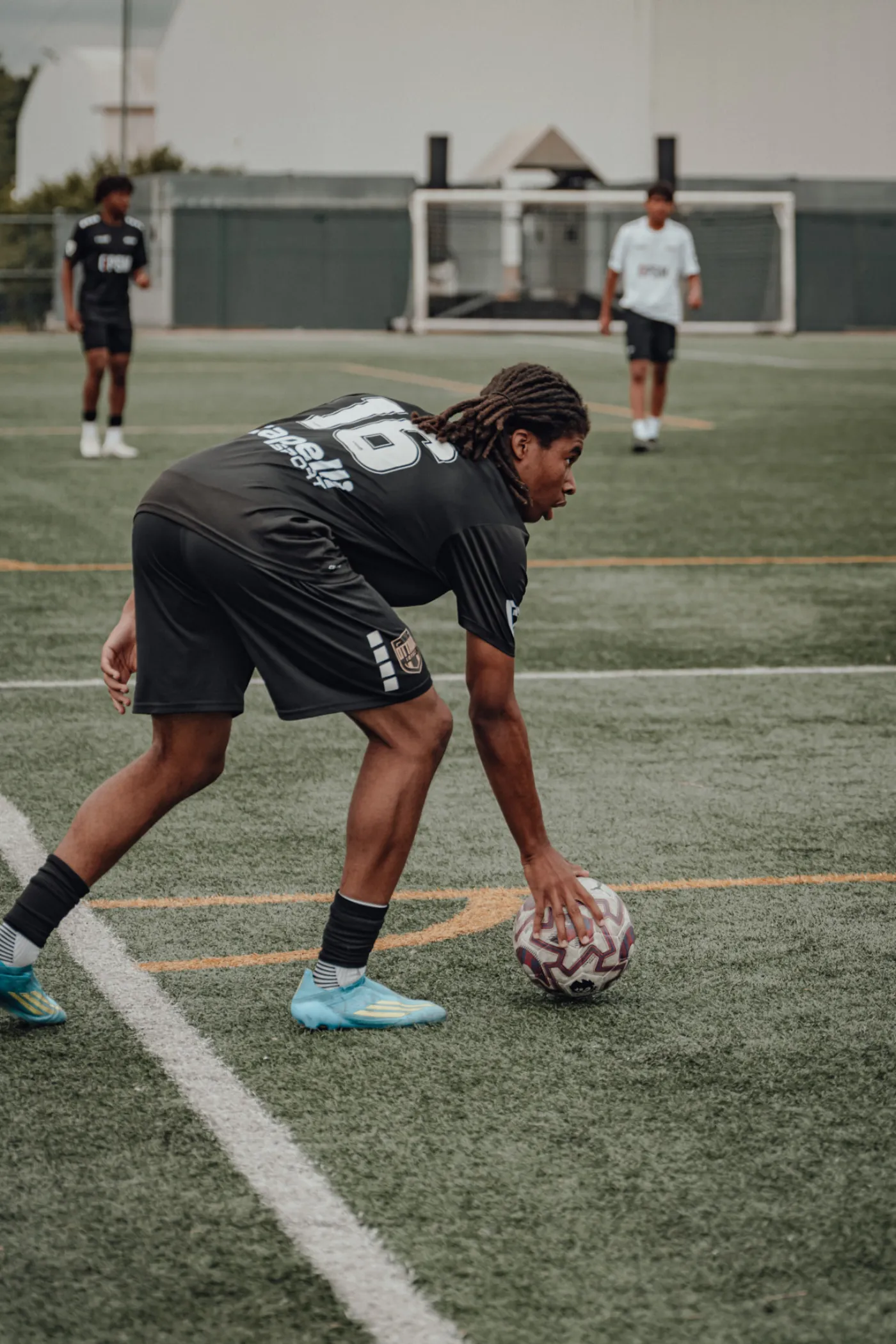
Physical Development for Soccer Players Should Support the Game
How strength, movement, speed, recovery, and appropriate guidance can help players perform with greater consistency.
Soccer places many different demands on the body. Players accelerate, stop, turn, jump, compete for space, and repeat actions throughout a match. Physical development can help a player meet those demands more consistently, but the purpose should remain connected to soccer.
The goal is not to chase a particular appearance or copy the routine of a professional athlete. Every player has a different stage of growth, training history, schedule, and position. A responsible approach develops useful qualities while protecting health, recovery, and long term participation in the game.
Movement Quality Creates a Foundation
Before adding greater resistance or intensity, players need control in basic movements. Balance, coordination, landing, changing direction, and maintaining stable positions can influence how efficiently a player moves on the field.
Quality should remain more important than complexity. An exercise does not become more useful because it looks advanced. Players benefit when they can complete the movement with control, understand its purpose, and receive appropriate feedback from a qualified coach.
Young players develop at different rates. Training should reflect the individual rather than comparing bodies or results with teammates. Growth can temporarily affect coordination and comfort, so patience and good instruction are important.
Strength Should Improve Soccer Actions
Appropriate strength work can support acceleration, stability, balance, and the ability to manage physical contact. It can also help players tolerate the repeated demands of training when it is planned responsibly.
The program should match the player's age, experience, and total soccer schedule. Technique, supervision, and gradual progression matter more than the amount of resistance being used. Players should not treat exhaustion as proof that a session was successful.
Strength training also needs a clear place within the week. A difficult session placed too close to an important match may reduce readiness. Communication between the player, soccer coach, performance coach, family, and medical staff can help prevent different parts of the schedule from working against one another.
Speed Is More Than Running Fast
Soccer speed includes recognizing a moment, reacting, creating an efficient first step, and moving in the correct direction. A player may have strong running ability but still arrive late because the situation was recognized slowly.
Speed development can therefore include movement technique, short accelerations, changes of direction, and exercises that require a decision. Rest between high quality efforts is important because the purpose is to practise speed, not simply to create fatigue.
The game also rewards changes of pace. A player who slows down, changes direction, and accelerates at the correct moment can create separation without needing to be the fastest athlete on the field.
Recovery Supports Adaptation
Training creates a demand, and recovery allows the player to respond to it. Sleep, regular meals, hydration, rest, and appropriate treatment all contribute to readiness. These habits may seem less exciting than a new exercise, but they strongly influence whether physical work becomes useful.
Players should pay attention to persistent tiredness, unusual discomfort, changes in movement, or a concern that affects normal participation. These issues should be communicated to a parent or guardian, coach, and qualified health professional as appropriate. Playing through every concern is not a sign of commitment.
Recovery also includes mental space away from constant evaluation. Time with family, school responsibilities, and ordinary interests can help young players return to soccer with better attention and energy.
Coordinate the Complete Training Load
Club training, school soccer, individual sessions, matches, tournaments, and physical preparation all place demands on the same player. Each activity may appear reasonable on its own while the complete schedule becomes too heavy.
Keeping a simple record of sessions, matches, sleep, and general readiness can support better conversations with adults responsible for the player. The record should guide awareness, not encourage obsession. If performance and energy begin to decline, the solution may be better recovery or a schedule adjustment rather than additional work.
OPSM Connect helps players keep development, video, profile information, and opportunities organized as one connected journey. Physical preparation should follow the same principle. Strength, speed, movement, and recovery are most valuable when they support the player on the field and respect the person beyond it.
CONNECT BEYOND THE TOUCHLINE
Related Articles
What Coaches and Scouts Notice Beyond the Highlight Reel
Talent earns attention, but the complete player is evaluated through decisions, habits, character, and consistency.
How the Soccer Scouting Process Really Works
A clear look at identification, evaluation, follow up, and the decisions that happen before an opportunity is offered.
How Soccer Scouting Changes by Position
Why goalkeepers, defenders, midfielders, wide players, and forwards are evaluated through different responsibilities.